

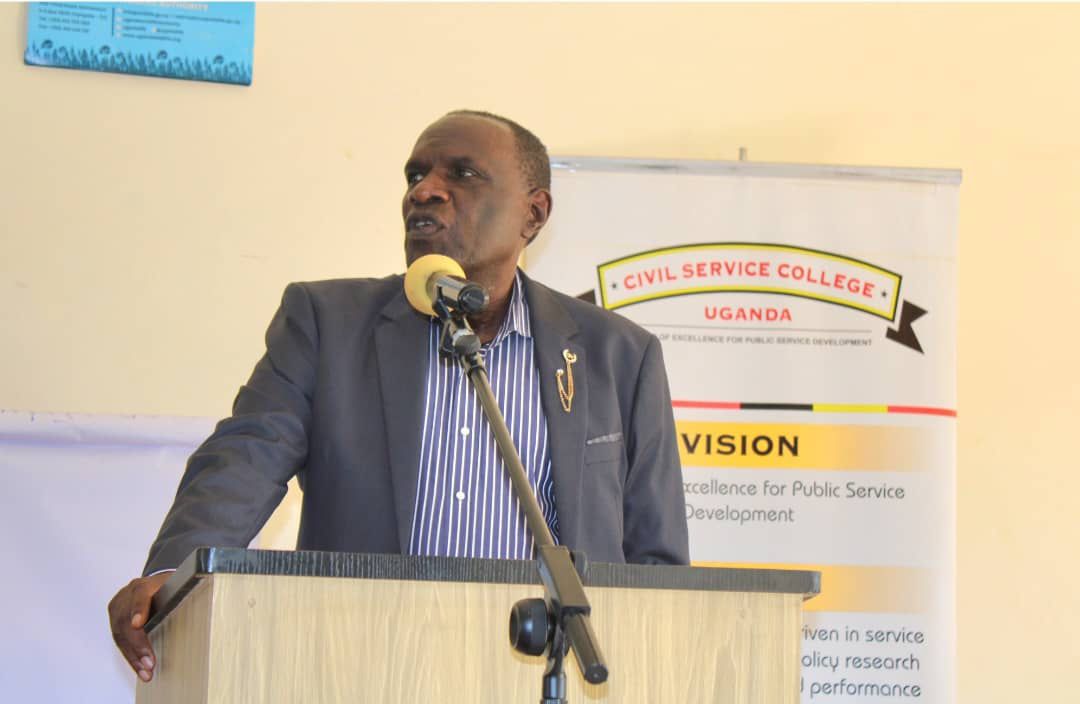
The Permanent Secretary in the Office of the President, Hajj Yunus Kakande, has called for a review of the mandatory retirement age for doctors, warning that the policy is weakening service delivery by forcing experienced professionals out of public service despite persistent skills shortages.
Speaking at the launch of the Office of the President’s Strategic Plan and Ministerial Policy Statement for the 2025/2026 financial year, Kakande said retaining highly skilled personnel particularly in specialised sectors such as health is critical to sustaining institutional capacity and government performance.
“We train doctors over many years, they gain experience over decades, and then we send them away when they are still productive,” Kakande said. “That is a big loss to the health sector and to government.”
He argued that many doctors remain capable of delivering quality services well beyond the standard public service retirement age, calling for human resource policies that respond to national needs rather than rigid age limits.
“This is something we must look at seriously. We still have gaps in service delivery, yet we are letting experienced people go,” Kakande said, adding that the matter should be addressed within broader public service reforms aligned to national development priorities.
Kakande made the remarks while outlining the coordinating role of the Office of the President, which oversees government performance, ideology, patriotism, democracy and socio-economic transformation.
He said implementation of the National Resistance Movement manifesto (2021–2026) currently stands at about 84 per cent, with some targets yet to be achieved.
“We have performed well, but there are areas that are not yet complete and will have to be carried forward,” he said.
He noted that departments under the Office of the President including socio-economic monitoring and evaluation, security coordination and manifesto implementation must ensure that staffing and deployment decisions support effective service delivery.
“Our policies should help government work better, not weaken it,” Kakande said.
The permanent secretary also cautioned public officers to uphold integrity and professionalism, noting that the conduct of officials in the Office of the President reflects directly on the Head of State and government.
“When you work in this office, your behaviour reflects on the President,” Kakande said, urging officers especially younger ones to read, internalise and implement strategic plans rather than treat them as routine documents.
The Strategic Plan and Ministerial Policy Statement are aligned with the Fourth National Development Plan, which prioritises increased household incomes, full monetisation of the economy, job creation and socio-economic transformation through sustainable industrialisation.
Meanwhile, the Minister for the Presidency, Milly Babirye Babalanda, said the new frameworks are intended to clearly define what Ugandans should expect from the Office of the President and how officials will be held accountable for service delivery.
“These instruments we are launching today are not merely administrative documents. They are a public commitment, a social contract between the Office of the President and the citizens of Uganda,” Babalanda said.
She said the Client Charter outlines services offered, delivery timelines and feedback mechanisms, giving citizens a benchmark to assess government performance in line with President Yoweri Museveni’s call for a transparent and accountable public service.
By setting clear standards and timelines, Babalanda said the charter strengthens trust between citizens and government while empowering the public to demand timely and quality services.
She said the Service Delivery Standards operationalise the charter by translating commitments into measurable expectations for staff across all departments, promoting professionalism, ethical conduct and efficiency.
“They reinforce the President’s message that government must serve the ordinary Ugandan with discipline, diligence and excellence,” Babalanda said.
She added that the Vote Strategic Plan provides a five-year roadmap for implementing the charter and standards, with priorities aligned to the National Development Plan and government policy direction.
“The plan provides a clear road map for programmes, security and intelligence coordination, citizen engagement, institutional strengthening and effective oversight of public administration,” she said.
Babalanda urged departments, agencies and field officers, including Resident District Commissioners, to integrate the new tools into their daily operations, saying consistent application at district level is critical to restoring public confidence in government.
She said the initiative also supports President Museveni’s broader push for results-oriented service delivery through programmes such as the Parish Development Model, the Youth Livelihood Programme and other poverty eradication interventions.
